
Loading...
Serving Claremont, CA and surrounding areas. (909) 788-2719
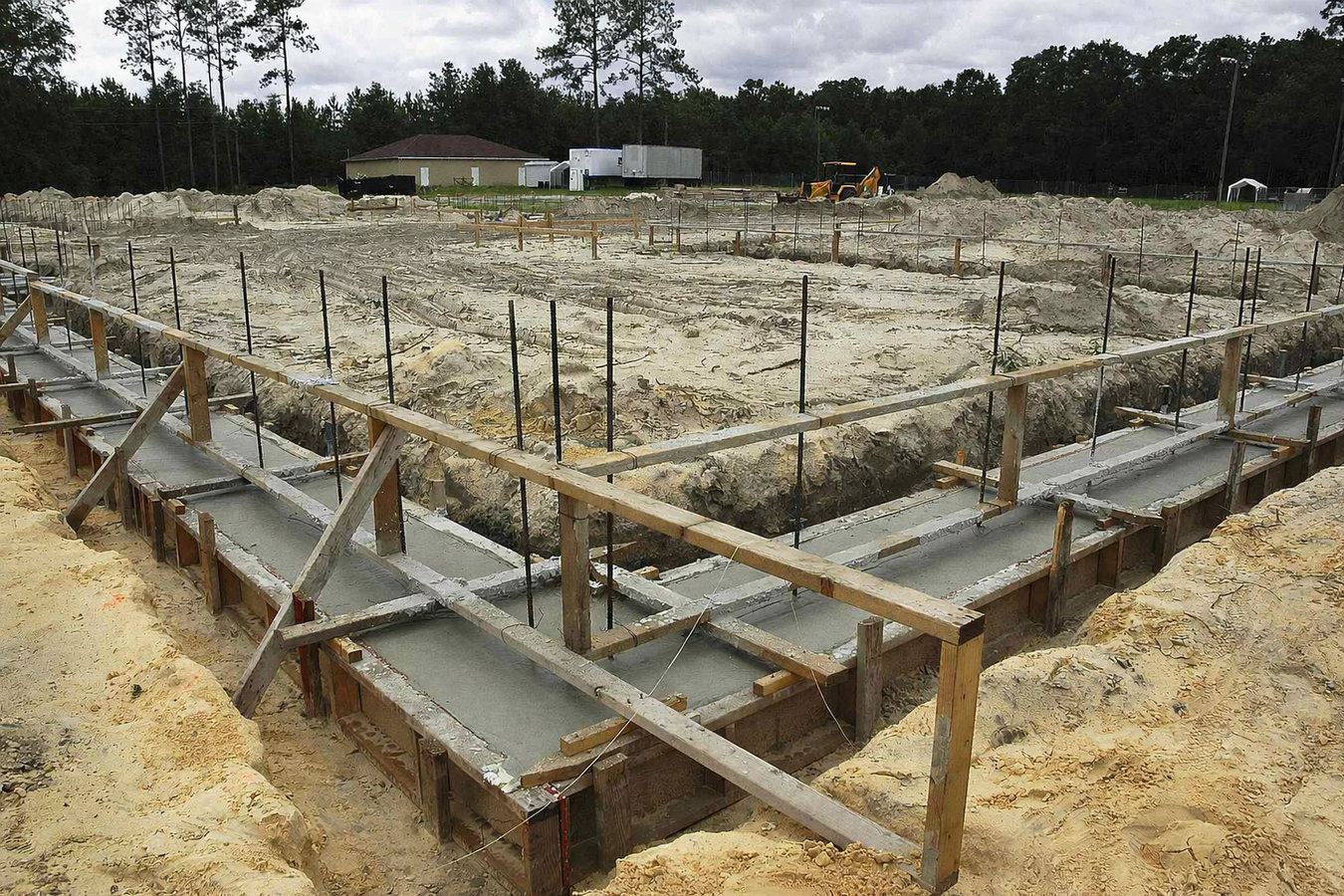
Claremont's clay soils and seismic requirements demand footings built to the right spec - we dig to the correct depth, place proper steel, and pass city inspection before we pour a yard of concrete.
Concrete footings in Claremont are the underground base that holds up everything above - a wall, a post, a deck, or your home's foundation - dug below grade to a depth that accounts for local soil movement, reinforced with steel, and poured after city inspection. Most residential footing jobs run one to three days of active work, not counting permit review time.
Homeowners in Claremont most often call us for footings when they are adding a room, building an ADU in the backyard, putting up a patio cover, or dealing with a structure that has started to lean. In every case, a proper footing is the part you never see but cannot skip. If your project also involves broader foundation work, our foundation raising service can address the structural base of the home itself alongside the new footing work.
In Claremont specifically, every footing is a permitted job. The city requires an inspection before the concrete is poured so an inspector can confirm depth and steel placement while the trench is still open. We handle the permit application and schedule the inspection - you do not have to manage that process yourself.
Cracks that angle out from the corners of doors or windows - especially in stucco or drywall - often signal that something below is moving. In Claremont, the clay soil's wet-dry cycle can shift footings that were not designed for that kind of movement. These cracks tend to widen over time if the underlying cause is not addressed.
A patio cover, pergola, or fence post that has started to lean or feel unstable when pushed likely has a footing that failed or was never adequate. Posts set in shallow concrete or directly in soil are especially vulnerable to Claremont's dry-then-wet soil cycles. A new footing stabilizes the structure and prevents a fall.
Any new structure needs proper footings before anything else goes up. In Claremont, this is required before a permit will be approved. If you are in the planning stage for a room addition or backyard ADU, getting a footing assessment early helps you understand the full scope and cost before you commit to the broader project.
Claremont gets most of its rain in winter, and water sitting against a foundation or near existing footings can soften the soil and accelerate movement. If water collects close to your home's base after a storm, it is worth having a contractor check whether the footings are still properly supported - catching this early is much cheaper than dealing with structural damage later.
We handle the full footing process - permit application, excavation to the correct depth, steel placement, city inspection, concrete pour, and cleanup. The size and depth of each footing is based on what it will carry and the soil conditions on your specific property, not a one-size number. A footing for a backyard pergola post is much smaller than one supporting a room addition wall, and we size every job to match the actual load. For projects where the footing connects to an existing structure, we also coordinate with our foundation raising team to make sure the connection points are solid before anything is poured.
Steel reinforcement is standard on all our footings. Concrete handles compression well but needs rebar to handle the tension forces that come from soil movement and seismic activity - both real factors in Claremont. If your footing is supporting a structure that also needs other concrete work, we can extend the project to include foundation installation or slab work so everything is built and inspected together.
Suits patio covers, pergolas, carports, and freestanding shade structures where individual post footings are needed.
Suits room additions, retaining walls, and detached garages that need a continuous concrete base running the full perimeter.
Suits homeowners building an accessory dwelling unit or adding square footage to an existing home in compliance with Claremont's current permit requirements.
Suits owners dealing with a failed or undersized footing under an existing structure that has begun to shift, crack, or lean.
Two local factors make Claremont footing work more demanding than in other parts of Southern California. First, the expansive clay soils found throughout the Pomona Valley swell with winter moisture and shrink in summer heat. That annual cycle puts steady stress on footings that were not designed with adequate depth or steel. Second, Claremont's location in a seismically active region means the local building code requires more reinforcement than lower-risk areas - and that reinforcement is inspected before the pour. Contractors who skip permits skip that inspection, and you carry the risk.
The older housing stock near the Claremont Colleges and The Village also adds a layer of complexity. Homes built in the 1950s and 1960s sometimes have additions built without permits, and when you add to an older structure, you may encounter footings that do not meet current standards. We assess what is already there before scoping new work. Homeowners in neighboring Pomona, CA and La Verne, CA face similar soil and seismic conditions, and we apply the same level of care across the full service area.
We come to the site before quoting you - checking access, looking at the soil, and measuring the area. You receive a written estimate that breaks down labor, materials, and permit fees, not just a single number. No quote is given over the phone without a site visit for footing work.
We submit the permit application to Claremont's Building and Safety Division on your behalf. For a straightforward project, plan on one to three weeks for review. We keep you updated on status and confirm a start date once approval comes through.
The crew digs the trench or holes to the required depth and places the steel reinforcement inside. The city inspector visits at this stage - before any concrete is poured - to confirm depth and steel. You do not need to be present, but we let you know the inspection date in advance.
After inspection approval, the concrete is poured and the crew cleans up the work area. In Claremont's heat, we wet the concrete or cover it to slow the drying process. The footing needs several days to reach working strength and about a month for full strength - we tell you exactly when it is safe to build on.
We reply to all inquiries within one business day. Call (909) 788-2719 or use the estimate form below to start the conversation.
We handle the permit, the inspection, and the pour. Free written estimate after an on-site visit.
(909) 788-2719We size and reinforce every footing with Claremont's clay soils and seismic zone in mind - not just to the minimum spec. That means the right depth, the right steel, and the right footing width for the actual load and soil conditions on your property. The Portland Cement Association publishes concrete footing standards that inform how we approach every job.
We never pour until the city inspector signs off on the open trench. That step protects your investment and keeps the permit record clean - which matters when you sell. A contractor who pours before inspection is cutting a corner that protects you, not them. We have never missed a Claremont inspection.
Unpermitted footings are one of the most common issues that surface in Claremont home sales, particularly in older neighborhoods near the colleges. Every footing we install is permitted, inspected, and documented. When a buyer's inspector shows up, there is nothing to hide and no surprise remediation cost landing on you at closing.
Claremont regularly sees temperatures above 95 degrees in summer, and concrete poured in afternoon heat without precautions cures weaker than it should. We schedule pours for early morning and keep concrete moist during the first days of curing. Your footing gains full strength the way it is supposed to - not the way a rushed schedule demands.
Proper footing work is invisible once the job is done - but it is what everything else depends on. Getting it right the first time costs less than fixing a failed footing under a structure you built on top of it.
Lift and stabilize an existing foundation that has settled or shifted in Claremont's clay soils.
Learn MoreFull foundation installation for new structures or major additions requiring a complete base system.
Learn MoreWe visit your site, assess the soil, and give you real numbers - call today and we respond within one business day.