Loading...
Serving Claremont, CA and surrounding areas. (909) 788-2719
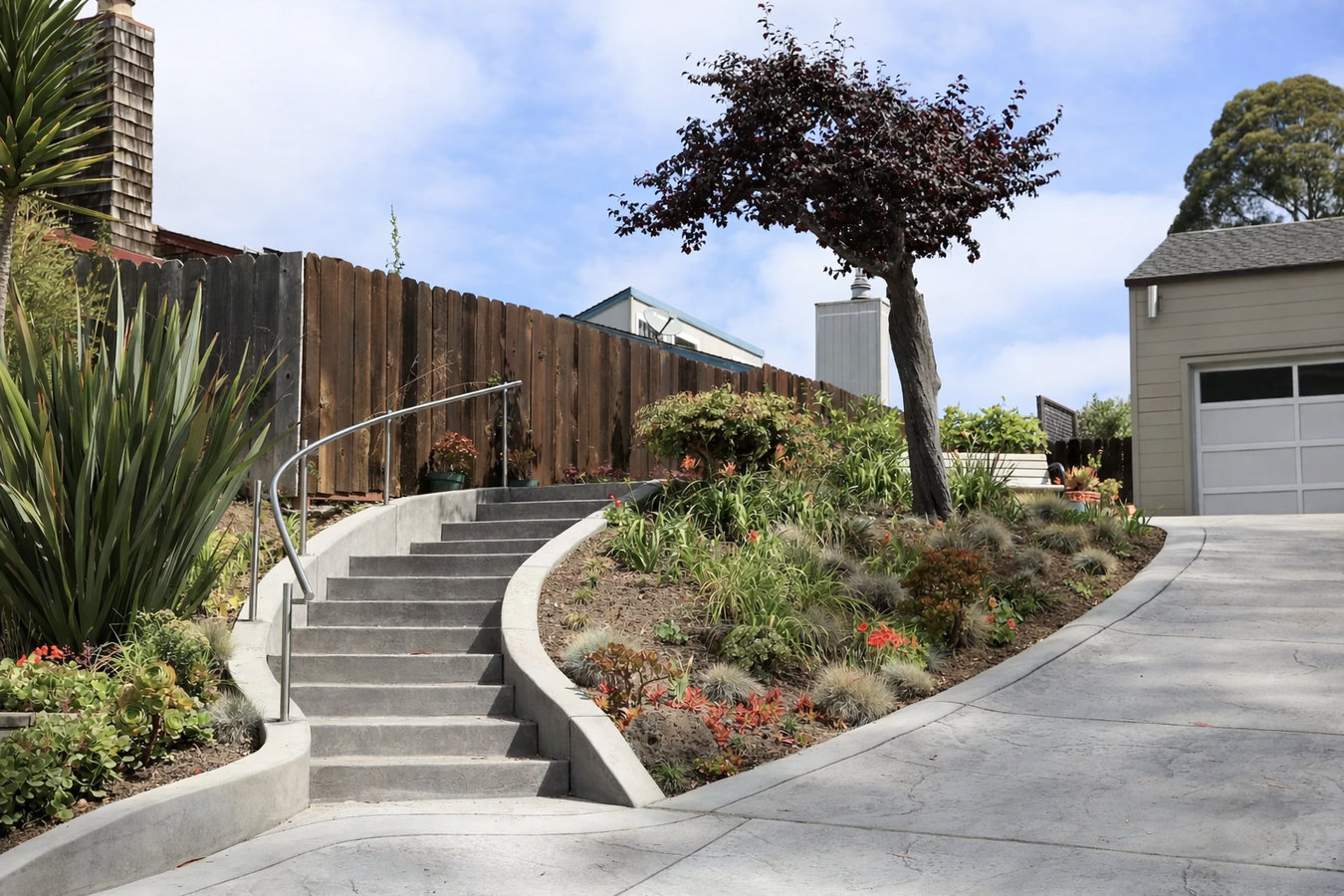
Cracked, tilting, or crumbling front steps are a safety problem your family deals with every day. We build concrete steps that stay level through Claremont's shifting soils and intense summer heat.
Concrete steps construction in Claremont means building a single poured solid staircase - not stacked blocks or bricks - most front-entry jobs taking one to two days of active work plus a 24 to 48 hour cure period before you can use them. A well-built set of concrete steps built for local soil conditions can last 30 to 50 years with minimal maintenance.
A significant portion of Claremont's homes were built between the 1920s and 1960s, and many still have their original concrete steps. These older steps were often poured without the reinforcement used today, and decades of clay soil movement and sun exposure have taken their toll. If your steps are in one of Claremont's established neighborhoods, there is a good chance they are overdue for replacement. If you are addressing your front entry, it is also a natural time to look at adjacent concrete work like concrete retaining walls that may be dealing with the same soil-driven deterioration.
Cracks wide enough to catch a finger signal that structural integrity is compromised. In Claremont, these cracks are often caused by clay soil shifting beneath the steps during dry spells and wet winters - and they tend to widen over time rather than stay stable. Once cracking reaches a certain point, patching is only a temporary fix.
If any step shifts slightly when you step on it, or the staircase no longer looks level from the side, the base underneath has settled or eroded. This is a safety issue - an uneven step is one of the most common causes of trip-and-fall accidents. In Claremont's older neighborhoods this kind of settling is especially common in homes where original steps were poured directly on unprepared ground.
When the front edges of your steps chip, flake, or break away in small pieces, the surface layer of concrete is deteriorating. This makes the steps rough and uneven underfoot and exposes the interior of the concrete to moisture, which speeds up further damage. Steps showing this kind of surface breakdown are past the point where a simple resurfacing will hold long-term.
Concrete steps should have a very slight forward slope so water drains off quickly. If you notice water pooling on your steps after Claremont's winter rains, the steps were either built flat or have settled into a backward tilt. Standing water accelerates surface wear and creates a slip hazard - a problem worth addressing even in dry months when morning dew is common.
We build front-entry staircases, side-entry steps, and multi-step configurations for Claremont homes. Every project starts with the same foundation work: removing old concrete, excavating the area, compacting the ground, and laying a gravel base before a single yard of concrete goes down. The steel reinforcement goes in next, inside the forms, so the finished steps have internal structure holding them together. The surface finish - broom, stamped, or exposed aggregate - is the last decision and has no effect on the structural quality underneath.
Front entries are often just one part of a larger outdoor project. Homeowners who are rebuilding their steps frequently find they also want to address nearby concrete work - whether that is a slab foundation that has shifted or the walkway connecting the steps to the street. Addressing related work at the same time saves labor costs and avoids tearing up new concrete to fix something nearby later.
Suits homeowners with cracked, uneven, or structurally compromised existing steps that are past the point of repair.
Suits homeowners adding steps where none exist or reconfiguring a front entry as part of a broader home improvement.
Suits homeowners who want the look of stone or brick while keeping the durability and low maintenance of poured concrete.
Suits homeowners who want a practical, grip-friendly surface that holds up through Claremont's weather year after year.
Claremont summers regularly push past 95 degrees, and high heat causes freshly poured concrete to dry too fast on the surface while the inside is still curing - producing surface cracks that show up within weeks of the pour. Local contractors who know this schedule their pours for the coolest part of the day and use additives that slow the drying process. The clay soils under much of Claremont also expand and contract with seasonal rain, which is the primary reason older steps in the Village and foothill neighborhoods are cracking - they were poured without the base preparation and reinforcement that accounts for this ground movement.
We work throughout the Inland Valley, including homeowners in Pomona and San Dimas, where the same soil and climate challenges apply. The permit and inspection process is essentially identical across these cities, and we handle it the same way - the same care on the base, the same reinforcement standards, the same attention to pour timing.
We ask a few basic questions - how many steps, whether you are replacing existing ones or building new, and what finish you have in mind. We schedule a site visit to look at the ground condition and existing structure, then give you a written estimate that breaks down labor and materials separately. We reply within 1 business day.
We submit the permit application to the City of Claremont's Building and Safety Division before any work begins. This typically takes a few business days to two weeks. We handle this process - you do not need to do anything except be aware that work cannot legally start until the permit is approved.
We break out the old steps, haul away the debris, excavate the area, compact the ground, and lay a gravel base. This preparation work determines whether your new steps stay level for decades or start settling within a few years - it is the part of the job that most shortcuts cut.
We build the forms, set the steel reinforcement inside, and pour the concrete - finishing the surface with your chosen texture. After the 24 to 48 hour wait period, the steps are safe for foot traffic. Once cured, the city inspector visits to sign off on the work before the permit is closed out.
We reply within 1 business day. No pressure, no commitment - just a free written estimate for your front entry.
(909) 788-2719We prepare the base specifically for the expansive clay that runs under much of Claremont - compacting more deeply and using reinforcement strategies that account for seasonal ground movement. The result is steps that stay level through dry summers and wet winters instead of cracking within the first few years.
Claremont summers regularly push past 95 degrees, and high heat causes concrete to cure unevenly if the pour is done mid-day. We schedule summer pours for early morning and use techniques to slow surface drying - so the finished steps cure consistently all the way through, not just on top.
We submit the application, coordinate the inspection, and deliver a clean permit record on your property. That city inspection is an independent verification that the work meets current safety standards for step height, depth, and handrail requirements - and it matters when you sell your home.
Many Claremont homes were built in the 1940s through 1960s and still have their original steps - often without current-standard reinforcement or handrail configurations. We build to today's safety codes so your entry is not just solid, but also meets what inspectors and future buyers expect.
Steps built with the right base, the right reinforcement, and the right pour timing hold up through Claremont's climate in a way that shortcuts do not. You can review our contractor credentials on the Portland Cement Association website to understand what industry-standard concrete construction looks like, and you can verify our California license on the CSLB website before calling.
If the ground under your steps has shifted, addressing the foundation at the same time prevents the same problem from recurring.
Learn MoreRetaining walls and steps often need attention together when clay soil movement affects the front entry area.
Learn MoreEvery week your current steps stay in place is another week of safety risk - call or send a message now and we will get your project scheduled.